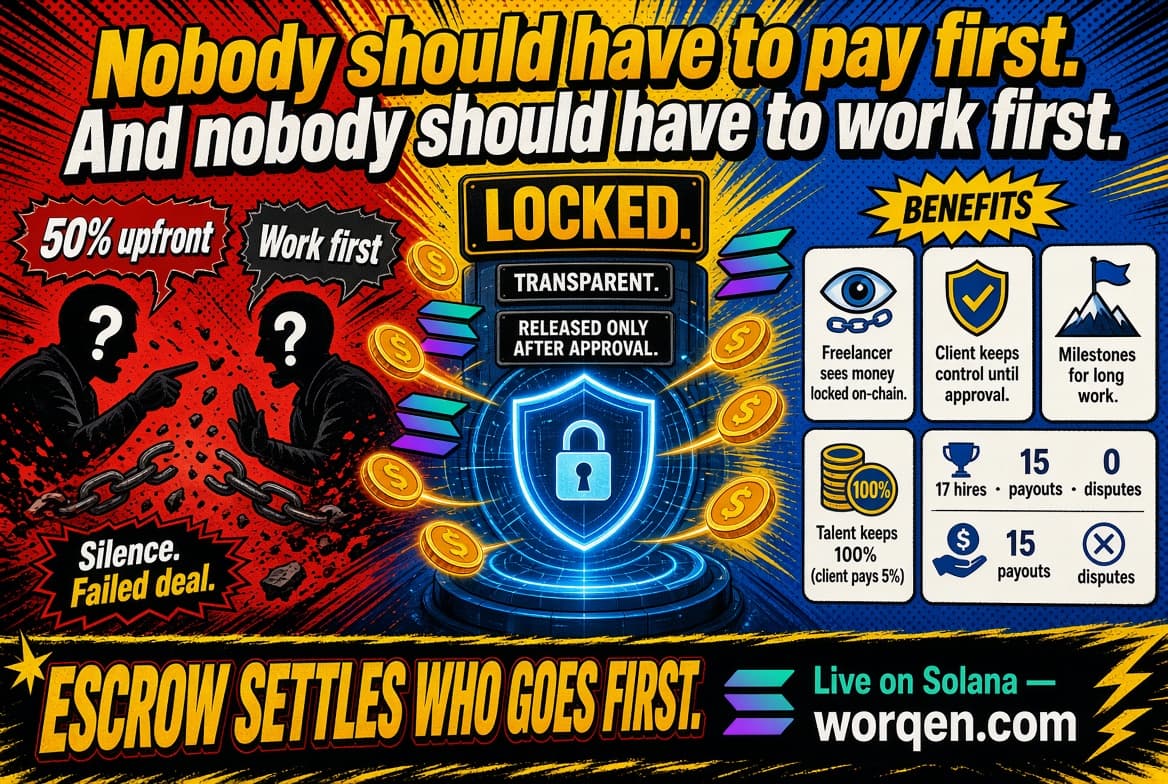
Nobody should have to pay first. And nobody should have to work first.
The deposit conversation kills deals every day. Here's how we made it unnecessary.
The other day I came across a conversation between two people who almost agreed to work together.
One says: 50% upfront, then I start.
The other says: do the work first, then I pay.
And that's it. Silence after that. Work that both of them wanted simply didn't happen.
Neither of them is wrong
The freelancer has delivered work and walked away with nothing more than once - so they ask for money upfront. The client has paid upfront and got nothing back more than once - so they don't pay.
Both are protecting themselves from something that actually happened to them. They're just protecting themselves from each other.
This isn't a trust problem between two specific people. It's a problem of having nothing between them except trust.
Step 1. The money doesn't get transferred - it gets locked
When a client hires someone, the money doesn't go to the freelancer and it doesn't stay with the client. It locks in escrow - in a smart contract, at the start of the job.
What that changes:
The freelancer can see that the money for this job already exists, and that it's no longer in the client's wallet. Not a promise, not a screenshot of a transfer - publicly verifiable on-chain. You can get to work.
The client hasn't handed anything over upfront. The money isn't in the freelancer's hands. It releases when the work ships and gets approved - and then it lands in seconds.
Step 2. Longer work runs in milestones
For a bigger job the same thing runs in stages: break it into milestones, funds lock for the full scope, and release per milestone as each one is delivered.
A year-long contract runs comfortably as monthly milestones - the person gets paid every month, guaranteed, and the client pays for what's been done.
Step 3. And if you don't end up agreeing - disputes
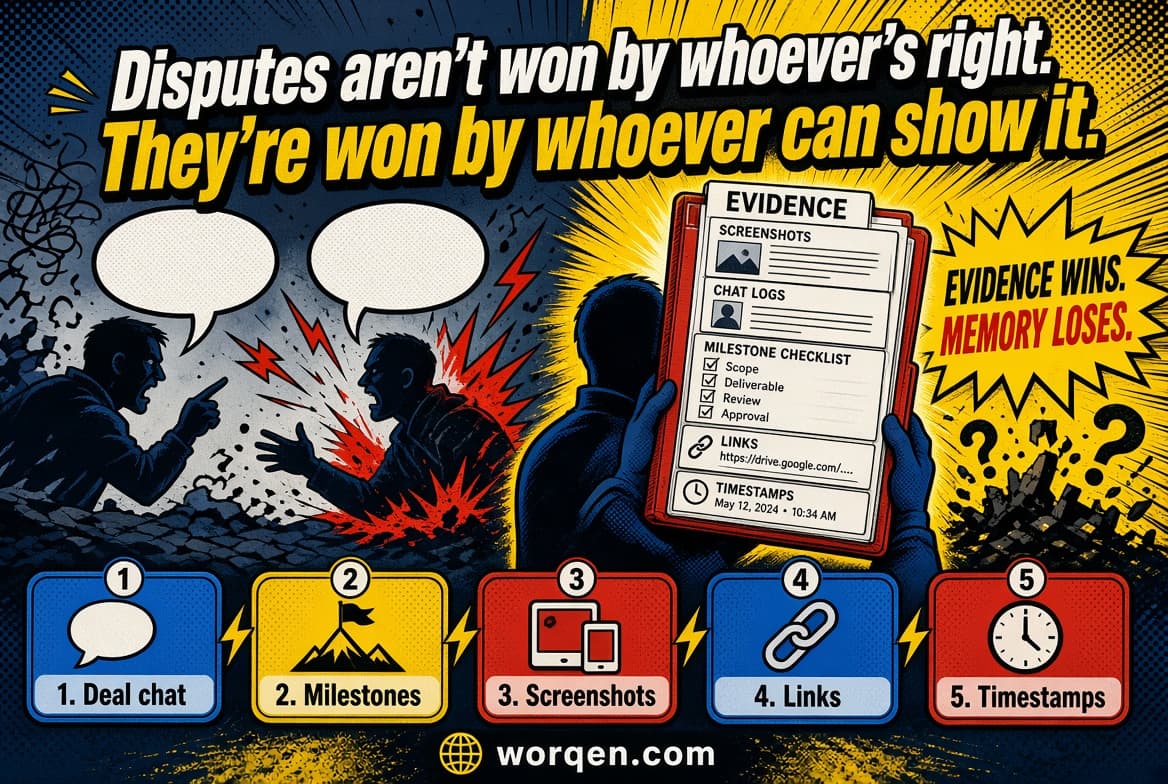
Escrow settles the question of who goes first. It doesn't settle the question of whether this is actually the work you agreed on. That's what disputes are for.